


































The Federal Government has unveiled plans to introduce tax exemption cards for small businesses and informal operators across Nigeria, as part of its sweeping tax reform agenda aimed at protecting low-income earners and reducing the burden of multiple taxes and levies. The initiative is designed to provide practical relief to micro-enterprises while curbing harassment by tax officials at federal, state, and local government levels.
The disclosure was made by Taiwo Oyedele, Chairman of the Presidential Committee on Fiscal Policy and Tax Reforms, during an interview on Channels Television. Oyedele explained that the proposed exemption cards would serve as a clear, verifiable signal that certain categories of businesses are legally exempt from paying specific taxes under the new framework.
According to him, the reforms are deliberately structured to move Nigeria away from what he described as a regressive tax system—one that places a disproportionate burden on the poorest segments of society—towards a more equitable and growth-supportive model.
Shifting focus to high-yield taxpayers
Oyedele argued that Nigeria’s limited tax enforcement capacity makes it inefficient and unfair to aggressively pursue low-income earners and micro-businesses. Instead, he said the government’s focus should be on high-yield taxpayers who earn substantial incomes but often remain outside the tax net.
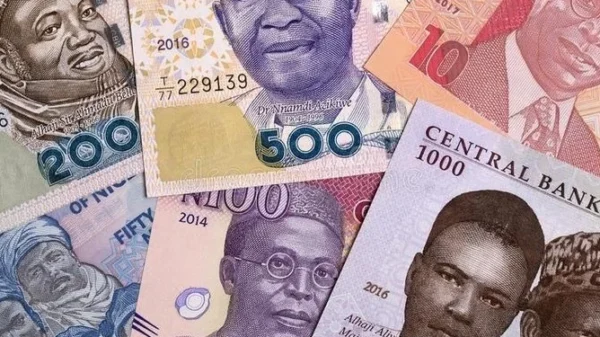
To underscore this point, he cited data from the Nigeria Deposit Insurance Corporation (NDIC), which shows that about 98% of bank account holders in Nigeria have balances below N500,000. According to Oyedele, this statistic highlights how misplaced fears around the tax reforms are, especially claims that ordinary Nigerians’ bank accounts would be arbitrarily targeted.
“Those are the people fighting the reform,” he said, adding that resistance is often driven by misinformation and, in some cases, deliberate manipulation by wealthy individuals seeking to avoid paying their fair share of taxes. He noted that some content creators and professionals earning significant monthly incomes have framed the reforms as an attack on the poor, despite standing to lose the most under stricter enforcement.
Oyedele dismissed claims that the reforms empower the government to debit bank accounts directly, stressing that the system relies on self-declaration. “At the end of the year, you tell the government your income. If you’re exempted, you simply declare your income and state that you are exempt,” he explained.
Tax exemption cards for micro and informal businesses
A major highlight of the reforms is the explicit protection of small businesses and informal operators. Oyedele explained that under the new presumptive tax regime, businesses with an annual turnover of N12 million or less will be deemed to lack the capacity to pay tax.
He clarified that turnover is not the same as profit, noting that many small businesses must first cover basic operating costs before earning any meaningful income. To prevent abuse and arbitrary enforcement, the reforms go further by clearly listing categories of micro-businesses that are effectively non-taxable.
These include roadside food vendors, vulcanisers, petty traders, and similar informal operators whose activities generate minimal income even at full capacity. For such businesses, the proposed exemption cards—or stickers—will act as official proof of exemption.
“What we are planning to do is for them to get tax exemption stickers, so nobody will bother them,” Oyedele said, emphasizing that the goal is to restore dignity to small business owners and allow them to operate without constant fear of extortion.
Harmonising taxes across states and councils
Oyedele also linked the exemption card initiative to broader efforts to harmonise taxes and levies at the sub-national level. While acknowledging that the Constitution limits the Federal Government’s ability to dictate tax policy to states, he said a harmonised tax framework has been developed in collaboration with the Joint Revenue Board to guide states and local governments.
Several states, including Ekiti State, Zamfara State, Anambra State, and Kano State, have already taken steps to adopt harmonised taxes and levies laws, with Lagos State also indicating plans to follow suit. The objective, he said, is to eliminate arbitrary charges and end the harassment of small business owners.
What you should know
The exemption card proposal aligns with the broader national tax reform agenda of Bola Ahmed Tinubu, which seeks to simplify Nigeria’s tax system, widen the tax base, and promote economic inclusion. At the sub-national level, states such as Anambra and Zamfara have already enacted harmonised revenue laws, while Ekiti recently became the first state to domesticate the Nigeria Tax Administration Act through its Ekiti State Revenue Administration Law, 2025.
If successfully implemented, the tax exemption card scheme could mark a turning point for millions of small businesses, offering clarity, protection, and relief—while allowing the government to concentrate enforcement efforts where they matter most.

Emmanuel Bassey is a Financial Expert that has worked in the Banking and Finance Industry for over 15+ years across different banks in Nigeria


