





























The Nigerian Economic Summit Group (NESG) has advised the Federal Government to move quickly on the privatisation of Nigeria’s state-owned refineries, arguing that the long-awaited reform would unlock domestic oil production capacity, reduce import pressures, and place the country on a more sustainable energy path. The recommendation is contained in the organisation’s newly released macroeconomic briefing titled “NESG 2025 Q3 GDP Alert,” which evaluates economic progress and emerging risks in the third quarter of 2025.
The advisory reflects increasing concern over stagnation in the refining subsector. According to the report, the refining industry recorded a modest growth rate of 5.84% in Q3 2025, a dramatic slowdown compared to the 20.5% expansion seen in Q2 2025, based on the latest data from the National Bureau of Statistics (NBS). NESG attributes this decline to structural weaknesses, policy delays, and unresolved operational constraints in government-run refineries.
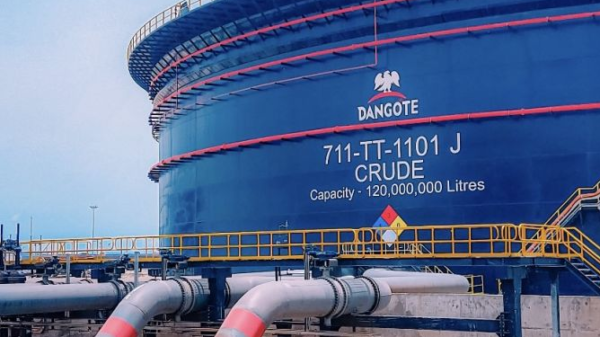
The call for action also follows reports that the Federal Government is contemplating the sale of its publicly owned refineries. Seen as a shift from decades of state dominance, the move aims to attract experienced private investors, encourage competition, and support downstream refinement capacity currently led by the privately owned Dangote Refinery.
Positive Outlook on Refining Capacity, Despite Structural Challenges
In its analysis, NESG acknowledged that Nigeria’s refining capacity has improved significantly over the past year, mainly due to the impact of private capital and investment in the sector. The organisation noted that increased output from domestic facilities has begun to reduce Nigeria’s import bill on petroleum products, a trend expected to strengthen further as the Dangote Refinery continues to ramp up capacity.
“The robust growth in the oil refining sector signals improved local refining capacity. These gains are expected to translate into reduced petroleum import bills as the Dangote Refinery continues its operations,” the report states.
However, NESG emphasised that Nigeria cannot reach full refining self-sufficiency while relying almost entirely on a single large private refinery. According to the think tank, reviving and commercialising the state-owned refineries in Port Harcourt, Warri, and Kaduna is essential for building resilience and ensuring competitive local pricing.
“To move towards full self-sufficiency in domestic refining, the government should proceed with the planned privatisation of state-owned refineries to restore their functionality as soon as possible,” NESG advised.
Reforms Showing Early Gains but Need Consolidation
NESG also highlighted that several reforms introduced since mid-2023, including the deregulation of petrol pricing and changes in energy sector governance, have begun to reflect positively in broader GDP performance. Nevertheless, it warned that these gains remain fragile unless supported by deeper structural policies, especially those that deal with operational inefficiencies and long-standing governance issues in the oil and gas value chain.
The group praised the growth trajectory in the agricultural sector as another sign of economic momentum but cautioned that critical challenges still threaten the industry’s long-term competitiveness. It recommended increased investment in supply chain infrastructure, access to credit, and technology to sustain the sector’s progress.
Ongoing Efforts Toward Refinery Transformation
Meanwhile, the Nigerian National Petroleum Company Limited (NNPCL) has revealed that it is seeking technical equity partners with the capability to operate the three refineries in line with international standards. This follows a series of rehabilitation efforts for the Port Harcourt refinery, which the company previously committed to retaining and upgrading rather than selling outright.
In June 2025, NNPCL ruled out the disposal of the Port Harcourt Refining Company, insisting that the facility would undergo extensive repairs and optimisation. However, the refinery, which was shut down on May 24, 2025 for a scheduled 30-day maintenance exercise, has remained inactive for more than 80 days, raising questions about execution timelines and operational transparency under the company’s new management.
For NESG, private sector-led revitalisation of the refineries represents the most pragmatic route toward transforming Nigeria’s refining capacity, stabilising the foreign exchange market, and reducing the burden of import-driven fuel subsidies.