Creator
  • Type:
  • Genre:
  • Duration:
  • Average Rating:
Log In
 
  • Marketplace
Log In
 
  • Type:
  • Genre:
  • Duration:
  • Average Rating:
  • Marketplace

Month: October 2025

CBN Data Show Rising Liquidity, Shrinking Government Borrowing

  • dollaers
  • October 3, 2025
  • Finance
  • 0 comments

Nigeria’s financial system witnessed major shifts in August 2025, with broad money (M3) expanding strongly even as government borrowing dropped sharply by 25.74% year-on-year, according to new data from the Central Bank of Nigeria (CBN).

Broad Money Jumps to N119.52 Trillion

M3 rose to N119.52 trillion, driven largely by stronger quasi-money balances and increased foreign assets. The growth signals rising liquidity in the system despite tight monetary conditions.

  • Quasi-money surged to N80.21 trillion, showing households and firms are moving funds into interest-bearing deposits.

  • Narrow money (M1), made up of cash in circulation and demand deposits, stood at N39.30 trillion. The relatively smaller size suggests Nigerians prefer keeping funds in banks rather than in physical currency.

Government Borrowing Contracts Sharply

Credit to government fell to N23.13 trillion, reflecting a steep 25.74% decline YoY. This shows less liquidity is being channeled toward deficit financing.

Meanwhile, credit to the private sector stayed modest at N75.83 trillion, indicating that rising liquidity is not fully translating into stronger lending to businesses or economic investment.

Economic Consequences of the Shift

The divergence between liquidity expansion and weaker government borrowing comes with mixed effects:

  • Private sector credit remains weak – despite high liquidity, banks are cautious, limiting business loans and job-creating investments.

  • Households shift to safer assets – more deposits are held in interest-bearing accounts rather than being spent, reducing consumption-driven growth.

  • Reduced fiscal push – lower borrowing implies fewer government projects, slowing public-sector-led growth.

  • Liquidity from abroad – net foreign assets rose to N40.94 trillion, but external inflows do not always feed into domestic credit for productive sectors.

Money and Credit Dynamics

  • Net domestic assets stood at N78.58 trillion.

  • Net domestic credit totaled N98.97 trillion, with the drop in government credit offset by private-sector balances.

  • Currency outside banks fell slightly by 0.92% to N4.45 trillion, though still 15.12% higher YoY.

  • Base money reached N35.68 trillion, dominated by bank reserves (N30.76 trillion) over physical cash.

This pattern shows liquidity growth is concentrated in bank balances, consistent with the CBN’s push toward a cash-lite economy.

CBN Policy Adjustments

At its September 2025 MPC meeting, the CBN fine-tuned its tools:

  • Reduced the Cash Reserve Ratio (CRR) for commercial banks from 50% to 45%.

  • Introduced a 75% CRR on non-TSA public sector deposits to sterilize idle government funds.

  • Adjusted the Standing Facilities corridor to +250/-250 basis points around the MPR, making overnight liquidity management more predictable.

Meanwhile, CBN bills issuance dropped by 14.01% in two months and 13.33% YoY to N9.29 billion, reflecting a cautious approach to liquidity sterilization. Special intervention reserves stayed at N284.36 billion, maintaining support for agriculture and small businesses.

Why It Matters

Nigeria’s money supply is expanding, but the contraction in government borrowing and modest private credit mean liquidity growth is not driving broad economic expansion. Businesses still face limited access to loans, household spending remains subdued, and public projects may slow.

In short, Nigeria’s financial system is becoming more liquid on paper, but unless funds flow into productive sectors, the broader economy will feel little impact.
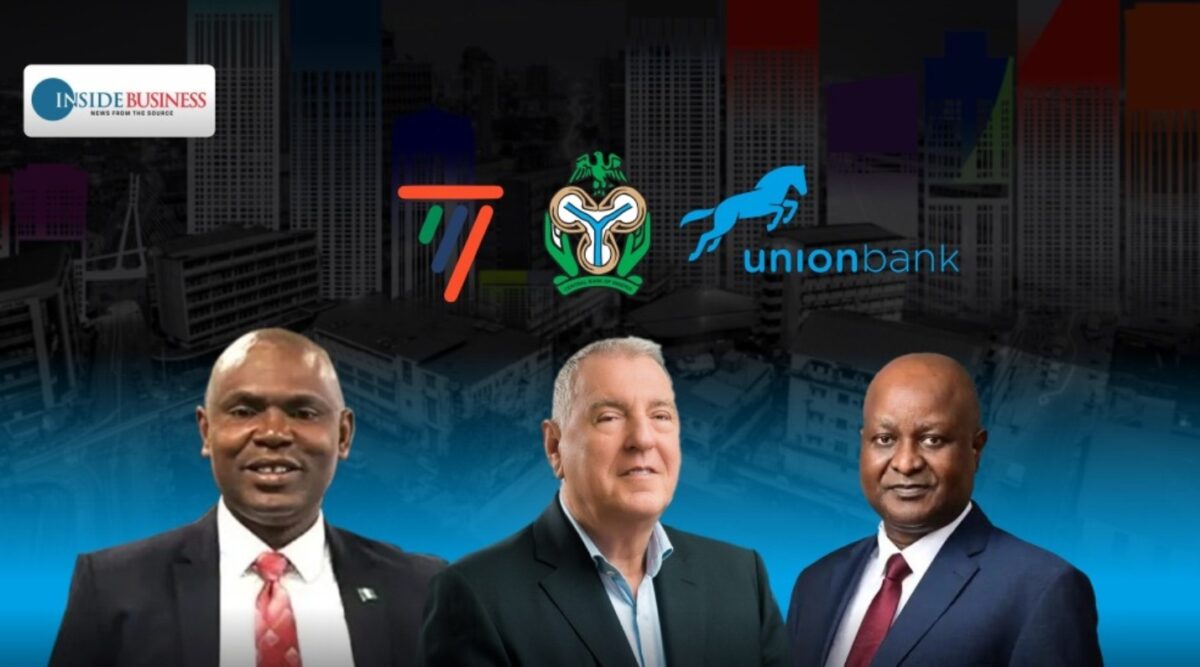

Who Owns Union Bank and Who Will Recapitalise It? – The Untold Backstory

  • dollaers
  • October 3, 2025
  • Bank
  • 0 comments

This article follows up on Titan Trust and Union Bank: A Deal, A Reversal, and the Regulator. Inside Business, a partner resource, provides this detailed reply and perspective. (Note: sensitive documents such as agreements and audited accounts have been excluded).

From Atlas Mara to Titan Trust: How the Trouble Began

Union Bank of Nigeria’s journey took a sharp turn after Atlas Mara—the African investment firm co-founded by Bob Diamond—sold its controlling stake to Titan Trust Bank (TTB) in 2022.

  • Atlas Mara first entered Union Bank in 2014, buying 20.9% from AMCON.

  • By 2018, it had raised its stake to 49%.

  • In December 2021, Atlas Mara and other major shareholders (including Union Global Partners) sold a combined 93.41% stake to Titan Trust Bank.

The deal, completed in June 2022, made Tropical General Investments (TGI) Ltd, linked to Dubai-based Vink Corporation and Cornelius G. Vink, the ultimate majority shareholder of TTB.

By November 2022, Titan Trust executed a Mandatory Takeover Offer for all remaining shares. In May 2023, a scheme of arrangement forced out minority shareholders, paving the way for Union Bank’s delisting from the Nigerian Stock Exchange in November 2023.

The CBN Investigation and Ownership Questions

The Union Bank takeover coincided with President Bola Tinubu’s appointment of Jim Obazee in July 2023 as Special Investigator into alleged corruption at the CBN and related agencies.

Obazee soon raised doubts about:

  1. Titan Trust Bank’s capacity to finance the Union Bank acquisition.

  2. The true owners and source of funding behind the deal.

Unable to verify the funding trail—particularly the alleged $190m equity by Cornelius Vink and Rahul Savara—Obazee recommended that government seize control.

By January 2024, President Tinubu approved the takeover. The CBN became the sole owner of Union Bank.

Lemo, Vink, and Savara: Missing in Action

  • Tunde Lemo, TTB’s chairman, forfeited his own stake and proposed that government take over Vink and Savara’s holdings after they repeatedly failed to appear before investigators.

  • Cornelius Vink and Rahul Savara, both based in Dubai, ignored multiple invitations, citing medical and family reasons through their lawyers.

  • Despite promises via legal counsel (G. Elias Chambers), neither man has appeared before investigators since August 2023.

Interestingly, none of the parties has gone to court to challenge the federal takeover. Even Afreximbank, which reportedly provided a $300m facility for the acquisition, has stayed silent.

New Management, Old Questions

In January 2024, the federal government dissolved Union Bank’s board and appointed an interim management team led by:

  • Yetunde Oni (Managing Director)

  • Mannir U. Ringim (Executive Director)

Later, the CBN reconstituted a new board with:

  • Bayo Adeleke (Chairman)

  • Four independent non-executive directors: Oluyinka Abimbola Morgan, Chiamaka Ezenwa, Mohammed Balarabe, and Eileen C. Shaiyen

  • Two new executive directors: Taiwo Shote and Kelechi Nwaoba

  • Ringim retained from the interim team

But this raised another concern: Whose interests do these new appointees represent? Are they proxies for Vink, Savara, and Lemo—or truly government choices?

The Big Question: Who Will Recapitalise Union Bank?

The CBN has directed all banks to raise fresh capital by March 2026. With Union Bank now fully under government control, Nigerians are asking:

  • Will the new appointees recapitalise the bank?

  • Or will the federal government itself step in as the ultimate backer?

For now, the ownership and future of one of Nigeria’s oldest banks remain uncertain, political, and deeply entangled in controversy.

The story of Union Bank is no longer just about banking—it’s about power, politics, and accountability in Nigeria’s financial system.

CBN Introduces Major Reforms to Nigerian Fixed Income Market: Settlement to Shift to FMDA Infrastructure

  • dollaers
  • October 3, 2025
  • Finance
  • 0 comments

Abuja, Nigeria – October 3, 2025 — In a landmark move to modernize the Nigerian financial system, the Central Bank of Nigeria (CBN) has announced a phased implementation of sweeping operational reforms within the Nigerian Fixed Income Market. These reforms are designed to enhance market transparency, improve operational efficiency, and establish a more robust regulatory framework, while aligning the market with global best practices.

The initiative marks a significant shift in the country’s financial infrastructure. As part of the reform, the CBN will assume direct oversight of the fixed income trading platform and end-to-end settlement operations, bringing them under the apex bank’s control. This change, the CBN said, is crucial to strengthening the integrity of the fixed income market, which plays a vital role in facilitating capital formation, managing public debt, and supporting monetary policy transmission in Nigeria.

According to the CBN, the goal of this strategic transition is to create a unified market structure where all fixed income transactions—from trade execution to final settlement—are supervised within a central regulatory ecosystem. The Bank said this will not only increase transparency and reduce settlement risks but also enhance investor confidence and deepen market participation.

In its official communication, the CBN stated, “This reform is an integral part of our ongoing efforts to reposition the Nigerian financial markets. We aim to foster a more transparent, efficient, and resilient fixed income ecosystem capable of supporting economic growth and the smooth transmission of monetary policy.”

The reform will be executed in phases to ensure stability and avoid disruption in the market. The implementation plan includes rigorous testing, stakeholder engagement, and a staged rollout of new infrastructure.

The key milestones of the first phase include:

  • User Acceptance Testing (UAT): Scheduled for the second week of October 2025, UAT will involve comprehensive testing of the new settlement process to ensure functionality, security, and operational readiness.

  • Pilot Phase: Upon successful completion of UAT, a pilot phase will run alongside the current structure. This allows for gradual adaptation and minimizes operational risks during the transition.

  • Go-Live 1 – Settlement Process Migration: If the pilot phase proves successful, the CBN will officially migrate all fixed income settlement processes to its internal system on November 3, 2025.

  • Go-Live 2 – Trading Platform Activation: The final step will see the activation of the new CBN-sponsored trading platform, with all trading activities involving Primary Dealers, Market Makers (PDMMs), Pension Fund Administrators (PFAs), and other authorized participants moving to the new environment starting December 1, 2025.

The Central Bank has reaffirmed its commitment to working closely with key stakeholders throughout the transition. In particular, the Bank acknowledged the contributions of the Financial Markets Dealers Association (FMDA) in the development of the country’s financial markets and emphasized the need for strong collaboration moving forward.

“We recognize the pivotal role of market participants, including the FMDA, and we expect full cooperation as we implement this important reform. Our goal is to ensure that the fixed income market operates on a modern, transparent, and efficient foundation,” the Bank said.

These changes form part of the broader financial market reforms being championed by the CBN to reposition Nigeria as a competitive investment destination. The central bank emphasized that the implementation will be carried out in a structured and coordinated manner to prevent disruptions and to protect the interests of all market participants.

Stakeholders with inquiries or those seeking clarification are encouraged to contact:

Dr. Okey Umeano
Acting Director, Financial Markets Department
📧 oumeano@cbn.gov.ng

  • ‹ Previous
  • 1
  • …
  • 13
  • 14
  • 15
Forgot Password
Please enter your email address or username below.
*
 
Login
*
*
Lost Your Password
Dont have account? Signup