






Creator
  • Type:
  • Genre:
  • Duration:
  • Average Rating:
Log In
 
  • Marketplace
Log In
 
  • Type:
  • Genre:
  • Duration:
  • Average Rating:
  • Marketplace

Stocks

Best-Performing Nigerian Stocks for the Week Ended 2 January 2026

  • dollaers
  • January 5, 2026
  • Stocks
  • 0 comments

The Nigerian equity market kicked off 2026 on a strong footing, with the benchmark Nigerian Exchange (NGX) All-Share Index (ASI) delivering an impressive weekly performance. By the close of trading on Friday, January 2, 2026, the ASI had gained 2,952.53 points, ending the week at 156,492.36 points. This marked a 1.92% increase from the previous week’s close of 153,539.83 points and represented the first time in history that the index crossed the 156,000 level.

The rally was achieved despite a shortened trading week, as Thursday, January 1, was observed as a public holiday to mark the New Year. With only four trading sessions, the market still managed to record broad-based gains, signalling renewed investor optimism at the start of the year.

Trading activity and market breadth improve

Market participation rose sharply during the week, with total turnover climbing to 7.8 billion shares valued at N134.4 billion, executed across 150,799 deals. This was a significant jump from the 2.8 billion shares traded in the previous week, underscoring increased investor engagement.

Equity market capitalisation also expanded, rising by 2.09% to N99.93 trillion, up from N97.89 trillion. This near-N100 trillion valuation highlights the scale of value creation driven by rising share prices across multiple sectors.

Market breadth was notably positive. A total of 73 equities closed higher, compared to 44 gainers in the preceding week. Decliners reduced to 23 stocks, down from 30 previously, while 51 equities closed flat, reflecting a healthier balance between buying and selling pressure.

Index and sector performance

The All-Share Index remained in positive territory throughout the week. It opened on Monday with a strong 0.55% gain, followed by a 0.42% rise on Tuesday. Although Wednesday also ended in the green, it was Friday’s session that delivered the historic milestone, pushing the index decisively above 156,000 points.

Other major indices followed suit. The NGX 30 Index advanced 1.85%, reflecting gains among large-cap stocks, while the NGX Premium Index edged up 0.28%, supported by strength in its core constituents. Among blue-chip stocks, Access Holdings led with a 12.20% weekly gain, while UBA and Zenith Bank each rose 2.38%, and MTN Nigeria added 1.39%.

From a sectoral perspective, the NGX Insurance Index topped the leaderboard with a 5.93% gain, as 11 insurance stocks closed higher. Regency Assurance, NEM Insurance, and Cornerstone Insurance all recorded double-digit gains, reflecting renewed interest in the sector.

The NGX Consumer Goods Index followed with a 3.44% increase, buoyed by sharp rallies in Honeywell Flour Mills (+29.58%) and McNichols (+21.69%). Banking stocks also performed strongly, with the NGX Banking Index rising 2.96%, while the Oil & Gas Index gained 1.16% and the Industrial Goods Index advanced 0.82%.

Top gainers and losers

On the gainers’ table, Austin Laz & Company Plc led the market, surging 45.94% week-on-week to close at N4.67. It was followed closely by Aluminium Extrusion Industries Plc, which gained 45.57% to close at N23.80. Other standout performers included Eunisell Interlinked, Associated Bus Company, Honeywell Flour Mills, Fidson Healthcare, Deap Capital Management & Trust, McNichols, Ikeja Hotel, and C&I Leasing, all of which posted gains exceeding 20%.

Conversely, E-Tranzact International Plc topped the losers’ chart, shedding 9.92% to close at N11.35, while First HoldCo Plc declined 7.92% to N48.80. Other decliners included LivingTrust Mortgage Bank, CAP Plc, Champion Breweries, Abbey Mortgage Bank, Nigerian Breweries, Sovereign Trust Insurance, PZ Cussons Nigeria, and Seplat Energy.

Market outlook

Looking ahead, the All-Share Index is edging closer to a sustained break above the 156,500-point level and is within reach of the psychologically important N100 trillion market capitalisation milestone. Analysts suggest that if buying interest broadens across more stocks, the market could test new highs above 160,000 points, although a short-term pullback remains possible after such a strong run.

Overall, the week ended January 2, 2026, set a confident tone for the Nigerian stock market, with strong breadth, rising liquidity, and record-breaking index levels pointing to improving investor sentiment as the year begins.

NGX Premium Stocks Deliver Strongest Returns as Index Outperforms Broader Market in 2025

  • dollaers
  • January 5, 2026
  • Stocks
  • 0 comments

Nigeria’s equity market closed 2025 on a notably bullish note, with premium-listed stocks on the Nigerian Exchange outperforming the broader market and reinforcing investor confidence in companies with strong governance, liquidity, and scale. Data from the Nigerian Exchange (NGX) shows that the NGX Premium Index delivered superior returns relative to the benchmark All-Share Index (ASI), highlighting the value investors placed on high-quality stocks during the year.

The NGX Premium Index ended 2025 at 15,493.2 points, representing a full-year gain of 59.40%, or 5,773.4 points. The index began the year at 9,719.8 points and decisively broke through the psychologically important 15,000-point level as the year progressed. This rally was supported by robust trading activity, with more than 32 billion shares exchanged in premium stocks over the course of the year, reflecting sustained investor interest.

By comparison, the broader All-Share Index also recorded an impressive performance, rising by 51.19%, or 52,686.6 points, to close the year at 155,613 points. While the overall market delivered strong gains, the Premium Index clearly outpaced it on a year-to-date basis, underscoring the resilience and appeal of Nigeria’s top-tier listed companies amid shifting macroeconomic conditions.

Third-quarter momentum powered the rally

A significant portion of the Premium Index’s outperformance was driven by a strong third-quarter rally, particularly in July. During the month, the index surged by 26.74%, helping to lift total Q3 performance to an 18.19% return—the strongest quarterly showing of the year. Market analysts attribute this momentum to a combination of improved investor sentiment, earnings optimism, and selective foreign portfolio inflows into fundamentally strong stocks.

The NGX Premium Index is designed to track companies that meet stringent listing requirements, including a minimum free float of ₦40 billion, market capitalisation of at least ₦200 billion, and a corporate governance score of no less than 70%. These thresholds are intended to enhance transparency, liquidity, and investor confidence, making the index a barometer for high-quality equities on the Nigerian market.

Broad-based gains across premium stocks

Performance in 2025 was largely broad-based, with seven of the eight premium stocks ending the year in positive territory. This contrasts with more uneven outcomes in other segments of the market and reflects the defensive strength of premium stocks during periods of volatility.

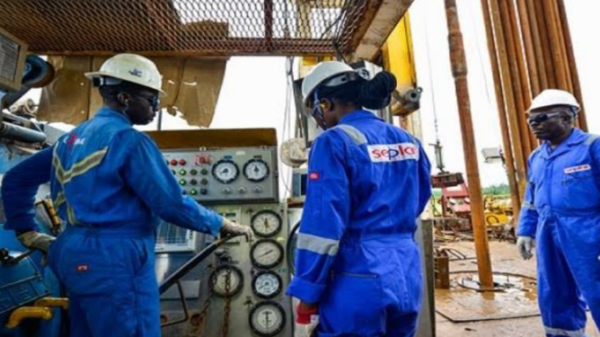
One of the lower-ranked performers among the premium cohort was Seplat Energy, which finished seventh with a modest gain of 1.91% for the year. Seplat closed 2025 at ₦5,809 per share, up slightly from its opening price of ₦5,700.

Although the 2025 performance paled in comparison to its exceptional 146.75% rally in 2024, when trading volume reached 29 million shares, Seplat still managed to stay in positive territory. Trading activity moderated in 2025, with about 19.2 million shares exchanged, reflecting a more measured investor approach.

Seplat’s year in review

Seplat’s price action during the year was relatively mixed. The stock was largely flat in the first half of 2025, with notable volatility in May when it declined by 12.91% to ₦4,964. This was followed by a rebound of 9.78% in June, which lifted the share price to ₦5,450. From July through September, prices stabilised, suggesting a period of consolidation.

October brought renewed optimism, as the stock gained 10% to reach ₦5,917. However, mild pullbacks in November and December trimmed those gains slightly, leaving the year-end price at ₦5,809.

Fundamentally, Seplat delivered a strong operational performance. The company reported a nine-month post-tax profit of ₦146.6 billion, more than double the ₦52.7 billion recorded over the same period in 2024. Its current market capitalisation stands at approximately ₦3.3 trillion, accounting for about 3.36% of the NGX’s total equity market value of ₦99.9 trillion.

What it means for investors

The strong showing of the NGX Premium Index in 2025 reinforces the growing preference for well-governed, highly capitalised stocks in Nigeria’s equity market. As macroeconomic reforms continue and market depth improves, premium stocks are likely to remain a focal point for both domestic and foreign investors seeking stability, liquidity, and long-term value.

Airtel Africa Raises Cumulative Share Buybacks to 40.9 Million, Reinforcing Shareholder Value Strategy

  • dollaers
  • January 4, 2026
  • Business, Stocks
  • 0 comments

Airtel Africa has increased the cumulative number of its repurchased shares to 40.93 million, underscoring its steady commitment to capital returns and disciplined balance-sheet management. The telecoms group disclosed that the shares were acquired at a cumulative average price of 152.24 pence per share since the launch of the first tranche of its US$100 million share buyback programme in December 2024.

The latest update was contained in a corporate filing submitted to the Nigerian Exchange (NGX) on Friday, January 2, 2026. According to the disclosure, Airtel Africa repurchased an additional 40,000 ordinary shares on December 31, 2025, continuing the execution of the buyback programme approved by shareholders.

Details of the transaction show that the shares were bought at prices ranging between 354.00 pence and 357.00 pence, with a volume-weighted average price of 355.95 pence. The purchases were carried out by Barclays Capital Securities Limited, acting as broker under the authority granted by shareholders and in line with the revised buyback framework announced by the company in September 2025.

In naira terms, and using an exchange rate of approximately N1,970 per British pound sterling, Airtel Africa has now spent an estimated N122.7 billion repurchasing its own shares. This figure highlights the scale of capital already returned to shareholders through share cancellations, even as the group continues to invest heavily in network expansion, data services, and mobile money growth across its African markets.

What the update means for investors
By consistently shrinking its outstanding share count, Airtel Africa is laying the groundwork for incremental support to key per-share metrics, such as earnings per share and free cash flow per share, assuming operating performance remains resilient. For long-term investors, the continued execution of the buyback programme signals management’s confidence in the group’s cash-generation capacity and balance-sheet strength.

Importantly, the repurchased shares are being cancelled, rather than held indefinitely in treasury. This approach permanently reduces the equity base and gradually increases the proportional ownership of remaining shareholders. While each individual buyback tranche may appear modest, the cumulative effect over time can be meaningful, particularly for a company of Airtel Africa’s scale.

Market participants are now closely watching how the ongoing buyback will influence the company’s valuation on both the NGX and the London Stock Exchange (LSE), where Airtel Africa is dual-listed. Attention is also focused on the remaining headroom under the US$100 million authorisation and the pace at which management chooses to deploy it in 2026.

Disciplined execution across trading venues
The December 31 transaction reflected a disciplined execution strategy within a narrow price band, suggesting tight control over market impact. The bulk of the shares were acquired on the London Stock Exchange at an average price of 355.79 pence. Additional liquidity was sourced from alternative trading venues, including BATS Europe, CHI-X Europe, Aquis Exchange, and Turquoise.

Such multi-venue execution is typical of UK-listed share buybacks, especially when companies opt to repurchase shares in relatively small daily volumes rather than aggressively intervening in the market. This approach helps minimise slippage, supports best execution standards, and reduces the risk of distorting short-term price dynamics.

Impact on share capital and voting rights
Following the cancellation of the repurchased shares, Airtel Africa’s issued ordinary share capital now stands at approximately 3.66 billion shares, with about 7.49 million shares held in treasury. As a result, total voting rights have been reduced to roughly 3.65 billion. The company noted that shareholders should use this updated figure when assessing disclosure obligations under UK Financial Conduct Authority rules, particularly for monitoring threshold crossings.

Although the numerical change in voting rights may appear marginal, the continued reduction reinforces the mechanical benefits of the buyback programme, steadily increasing the relative stake of long-term shareholders.

Stock performance and outlook
On the NGX, Airtel Africa’s shares closed at N2,270.00 on Friday, January 2, 2026, making it the fourth most valuable listed stock on the exchange, with a market capitalisation of about N8.53 trillion—roughly 8.55% of total NGX equity value. The stock reached a year high in late May 2025 before moderating and trading largely sideways through the second half of the year.

For the broader market, the latest update reinforces Airtel Africa’s reputation as a disciplined capital allocator. Analysts say the stock remains one to watch in 2026, as continued buybacks, alongside operational execution in data and mobile money, could further strengthen shareholder returns over the medium term.

Why GTCO Raised ₦10 Billion via Private Placement

  • dollaers
  • January 3, 2026
  • Bank, Stocks
  • 0 comments

The decision by Guaranty Trust Holding Company Plc (GTCO) to raise ₦10 billion through a private placement in late December 2025 has generated interest across Nigeria’s capital market. At first glance, the move appeared curious, especially given the group’s strong profitability, solid balance sheet, and the fact that its flagship banking subsidiary is already well capitalised. However, a closer look shows that the capital raise was driven not by financial stress, but by a specific regulatory requirement that applies uniquely to financial holding companies in Nigeria.

On December 30, 2025, GTCO announced that it had secured the necessary approvals from the Central Bank of Nigeria (CBN) and the Securities and Exchange Commission (SEC) to raise ₦10 billion via a private placement. The offer, which closed on December 31, 2025, was disclosed in a statement signed by the Group General Counsel and Company Secretary, Erhi Obebeduo.

Importantly, the transaction was not prompted by weakness at GTCO’s core banking operations. Guaranty Trust Bank Limited, the group’s main operating subsidiary, has already exceeded the CBN’s minimum capital requirement for commercial banks with international authorisation. As of September 30, 2025, GTCO reported share capital of ₦18.21 billion and share premium of ₦489.37 billion, bringing total shareholders’ funds attributable to paid-up capital and premium to about ₦507.58 billion. By conventional measures, this places the group in a position of strength.

The key driver of the private placement lies in the regulatory framework governing financial holding companies, commonly referred to as HoldCos. Under CBN guidelines, a financial holding company is required to maintain minimum paid-up share capital that is at least equal to the aggregate regulatory capital of all its regulated subsidiaries. These subsidiaries can include banks, pension fund administrators, payment service companies, asset managers, and other licensed financial entities within the group.

In simple terms, the rule can be expressed as: HoldCo paid-up share capital must be equal to or greater than the combined regulatory capital of its subsidiaries. The logic behind this requirement is straightforward. First, it ensures that the holding company has sufficient capital strength to credibly support its operating subsidiaries in times of stress. Second, it prevents the same capital from being effectively counted twice across the group structure. Third, it avoids situations where a thinly capitalised parent company sits atop robust, well-capitalised subsidiaries, acting merely as a pass-through vehicle.

As subsidiaries grow through retained earnings, balance sheet expansion, recapitalisation exercises, or the addition of new regulated businesses, their regulatory capital naturally increases. However, this growth does not automatically flow up to the holding company’s paid-up share capital. Unless the HoldCo raises fresh equity, a gap can gradually emerge between the capital held at the subsidiary level and the capital sitting at the parent company.

This is precisely the dynamic that GTCO encountered. Continued growth across its regulated subsidiaries increased the aggregate regulatory capital within the group, triggering the need for the HoldCo to top up its own paid-up share capital to remain compliant. Crucially, this requirement applies only to holding companies, not to standalone banks. That distinction explains why the transaction may have appeared idiosyncratic to some market observers.

GTCO’s experience is not unique. The same regulatory rule previously compelled Access Holdings Plc to undertake a private placement to align its holding company capital with the expanding capital bases of its subsidiaries. Over time, similar pressures could also emerge at other diversified financial groups such as Stanbic IBTC Holdings Plc or Sterling Financial Holdings Company Plc, particularly as their businesses grow and their regulated entities accumulate capital.

In essence, GTCO’s ₦10 billion private placement should be viewed as a mechanical outcome of regulatory discipline rather than a signal of distress. It reflects the natural consequence of business growth within a diversified financial group operating under Nigeria’s HoldCo framework. Far from indicating weakness, the capital raise underscores how regulatory oversight is keeping pace with expansion—ensuring that success at the subsidiary level is matched by adequate capital strength at the parent company.

Best Performing Banking Stocks in Nigeria in 2025: Winners, Laggards, and What Drove Investor Returns

  • dollaers
  • January 2, 2026
  • Bank, Stocks
  • 0 comments

Nigeria’s banking equities delivered a mixed but largely positive performance in 2025, reflecting a year of selective investor confidence rather than broad-based sector optimism. According to year-end market data from the Nigerian Exchange, the NGX Banking Index closed 2025 with a gain of 39.77%, trailing the broader Nigerian Exchange (NGX) All-Share Index (ASI), which posted a stronger 51.19% return.

While the banking sector underperformed the overall market, the results still marked a significant recovery from prior years of subdued sentiment. Investors increasingly differentiated between banks based on balance sheet strength, earnings sustainability, capital adequacy, and strategic execution. Out of the 12 listed banking stocks on the Exchange, only a handful managed to outperform the broader market benchmark, underscoring the highly selective nature of capital flows into the sector.

At the top of the leaderboard was Wema Bank Plc, which emerged as the standout performer with a remarkable gain of 124.18% in 2025. The bank’s share price climbed from N9.10 at the start of the year to N20.40 by year-end, driven by growing investor confidence in its digital banking strategy, expanding retail footprint, and improving profitability metrics. July proved decisive for Wema Bank, with a single-month surge of over 47%, reflecting peak investor enthusiasm.

Other strong performers included Stanbic IBTC Holdings Plc, which returned 73.61% as its share price rose from N57.60 to N100.00. Investors were drawn to Stanbic IBTC’s diversified earnings base spanning commercial banking, asset management, and pensions, as well as its consistent dividend track record. Mid-year rallies reflected renewed appetite for fundamentally strong and well-governed financial institutions.

First HoldCo Plc also delivered an impressive 70.77% return, climbing from N28.05 to N47.90. The rally was largely concentrated in December, when the stock surged over 54%, driven by renewed confidence in its restructuring efforts, capital position, and medium-term earnings outlook.

Among tier-one banks, Guaranty Trust Holding Company Plc (GTCO) gained 59.12%, closing the year at N90.70. Investors continued to favour GTCO for its strong capital buffers, predictable cash flows, and disciplined cost management. Similarly, Zenith Bank Plc posted a solid 35.82% gain, rising from N45.50 to N61.80, reinforcing its reputation for earnings consistency, robust liquidity, and dependable dividend payouts.

Mid-tier banks also featured prominently among the year’s winners. Ecobank Transnational Incorporated advanced by 49.64%, supported by diversified pan-African revenues and ongoing improvements in operational efficiency. Jaiz Bank Plc gained 51.67%, reflecting growing acceptance of its non-interest banking model, alongside speculative momentum in the second half of the year. FCMB Group Plc and Sterling Financial Holding Company Plc also delivered respectable gains of 28.19% and 25.89%, respectively, driven by retail-led growth strategies and improving asset quality.

Notably absent from the list of top performers were Fidelity Bank Plc, which posted a modest gain of 8.57%, and Access Holdings Plc, which ended the year with an 11.95% decline. Investor caution around integration risks, capital requirements, and earnings pressures weighed on both stocks.

Why this matters is that 2025 marked a clear shift in investor behaviour toward selective exposure rather than blanket sector positioning. Banking stocks that outperformed were those perceived as better equipped to navigate foreign exchange volatility, rising funding costs, and regulatory headwinds. The divergence between the NGX Banking Index and the broader ASI highlights cautious optimism—confidence is returning, but investors remain highly discriminating.

Looking ahead, banking equities are expected to remain among the most actively traded stocks on the NGX due to their dividend appeal and systemic importance. Performance in 2026 will likely depend on interest rate dynamics, FX stability, regulatory reforms, and each bank’s ability to sustain earnings momentum in an evolving macroeconomic environment.

Seplat Shares Rally Over 10% on London Stock Exchange Following Heirs Energies’ $500 Million Acquisition

  • dollaers
  • January 1, 2026
  • Stocks
  • 0 comments

Shares of Seplat Energy Plc surged by more than 10% on the London Stock Exchange during mid-day trading on December 31, 2025, as investors reacted positively to news of a major change in the company’s ownership structure. The stock climbed to 284 pence, up sharply from its opening price of 266.5 pence, marking one of its strongest single-day moves of the year.

Trading activity also spiked significantly, with more than 138,000 shares exchanging hands by mid-session. This was a sharp contrast to the relatively subdued activity seen a day earlier, when about 36,000 shares were traded throughout the entire session. Market participants attributed the rally to renewed investor confidence following confirmation that Heirs Energies had acquired a substantial equity stake in Seplat.

Details of the acquisition

Market sources confirmed that Heirs Energies acquired a 20% stake in Seplat Energy for approximately $500 million, instantly becoming the company’s single largest shareholder. The transaction represents a significant vote of confidence in Seplat’s long-term prospects and its role within Nigeria’s evolving energy sector.

The stake was acquired from French oil and gas company Maurel & Prom, which sold its entire 20.07% holding in Seplat as part of the deal. In a disclosure dated December 31, 2025, Maurel & Prom revealed that it sold about 120.4 million Seplat shares at 305 pence per share. The sale price represented a premium to Seplat’s prevailing market price prior to the announcement, a factor widely seen as a key catalyst behind the strong positive market reaction.

Under the terms of the agreement, Heirs Energies will make an upfront payment of $248 million, with the outstanding balance payable within 30 days. The deferred portion is secured by an irrevocable letter of credit, providing additional comfort to the seller. There is also a provision for up to $10 million in contingent consideration, depending on Seplat’s share price performance over the next six months.

Market performance and price trajectory

From a technical and historical perspective, Seplat’s share price performance in 2025 has been marked by volatility but strong recovery. The stock began the year trading at around 199 pence and gained modestly in January before facing downward pressure in February and March, when it dipped to about 173 pence.

Momentum returned in the second quarter, with Seplat posting a robust gain of nearly 35% and closing the first half of the year at 234 pence. The rally has extended into the second half of the year, with the stock gaining more than 20% in H2 alone. As of the latest trading session, Seplat’s year-to-date gain stands at over 45%, reflecting improving sentiment around the company’s fundamentals and strategic direction.

Analysts tracking the stock note that maintaining levels above the 280-pence mark could signal further upside in the near term, particularly if follow-through buying continues into early 2026. Meanwhile, Seplat shares listed on the Nigerian Exchange (NGX) were yet to fully reflect the London market’s reaction at the time of reporting.

Strategic implications and stakeholder reactions

The acquisition has drawn attention across Nigeria’s energy and capital markets, as it underscores a broader trend of increasing participation by indigenous and Africa-focused investors in strategic energy assets. Heirs Energies, a subsidiary of Heirs Holdings, is known for long-term investments across power, energy, financial services, and infrastructure.

Commenting on the deal, Tony Elumelu, Chairman of Heirs Energies, described the transaction as a long-term investment in Nigeria’s and Africa’s energy future. He noted that the group sees Seplat as a platform for sustained growth, value creation, and expanded indigenous participation in the continent’s energy value chain.

On the seller’s side, Maurel & Prom’s Chief Executive Officer, Olivier de Langavant, highlighted the firm’s long-standing involvement in Seplat’s evolution, describing the divestment as the culmination of a successful partnership that helped transform Seplat into one of Nigeria’s leading independent energy companies.

Bigger picture

Beyond the immediate market reaction, the transaction marks a major shift in Seplat’s ownership structure and reflects deeper changes underway in Nigeria’s energy investment landscape. With a strong balance sheet, rising production ambitions, and a new anchor shareholder with a long-term outlook, Seplat appears well positioned to consolidate its role as one of Africa’s leading indigenous energy companies as the sector continues to evolve.

Julius Berger, Two Others Hit 10% Daily Gain as NGX All-Share Index Closes Above 155,000 Points

  • dollaers
  • December 31, 2025
  • Stocks
  • 0 comments

The Nigerian equities market staged a strong comeback on Tuesday, December 30, 2025, as a broad-based rally pushed the benchmark index back above the 155,000-point psychological threshold. The renewed bullish momentum lifted investor sentiment across multiple sectors, reflecting sustained buying interest as the year draws to a close.

Data from the Nigerian Exchange Group showed that the All-Share Index (ASI) gained 645.2 points during the session, representing a 0.42% increase. The index rose from an opening level of 154,389.5 points to close at 155,034.7 points, marking a return to levels last seen during the market’s recent upward surge.

Market activity also improved significantly, with total trading volume jumping to 4.6 billion shares, compared with 1.47 billion shares recorded in the previous session. The sharp rise in volume suggested heightened participation by both institutional and retail investors, particularly in insurance and banking stocks. In total, trades were executed across 34,852 deals.

Market capitalisation mirrored the positive performance, expanding to N98.8 trillion from N98.4 trillion a day earlier. The increase underscores the depth of the rally, as gains were recorded across a wide range of stocks rather than being limited to a few heavyweight names.

Top gainers and losers

Leading the gainers’ chart were Julius Berger, Honeywell Flour Mills, and Guinea Insurance, each recording the maximum daily price appreciation of 10%. The strong performance of these stocks reflects renewed investor confidence, with bargain hunting and speculative interest driving prices sharply higher.

Other notable gainers included Austin Laz, which rose by 9.94% to close at N3.87, and Multiverse Mining, which gained 9.88% to settle at N13.35. The breadth of gains across construction, consumer goods, insurance, and mining stocks highlighted the broad-based nature of the rally.

On the downside, Union Dicon Salt and LivingTrust Mortgage Bank topped the losers’ table, shedding 10% each. First HoldCo also suffered a steep decline, dropping by 9.94%, while Veritas Kapital Assurance and Mutual Benefits Assurance lost 7.47% and 7.46% respectively.

Trading activity and value

In terms of volume, Cornerstone Insurance dominated the session, with approximately 3.6 billion shares exchanging hands, making it the most actively traded stock of the day by a wide margin. FCMB Group followed with 302.3 million shares, while Wema Bank ranked third with 97.3 million shares traded.

Access Holdings and Chams Holding Company completed the top five most traded stocks by volume, recording 75 million and 47.5 million shares respectively.

By transaction value, Cornerstone Insurance also led the market, with trades worth about N18.5 billion. FCMB posted transactions valued at N3.3 billion, while Zenith Bank recorded N2.2 billion. Wema Bank and Access Holdings followed with N1.8 billion and N1.6 billion respectively.

Performance of SWOOTs and banking majors

Stocks Worth Over One Trillion Naira (SWOOTs) closed largely in positive territory. BUA Foods advanced by 3.88%, while BUA Cement gained 2%, reinforcing the upbeat tone in large-cap consumer and industrial stocks.

Among the major banking stocks, Access Holdings rose by 1.67%, Guaranty Trust Holding Company (GTCO) appreciated by 1.62%, and Zenith Bank edged up by 0.24%. In contrast, First HoldCo recorded a sharp decline, while United Bank for Africa (UBA) slipped marginally by 0.37%.

Market outlook

With the All-Share Index reclaiming the 155,000-point level and year-to-date performance standing at an impressive 50.63%, the Nigerian stock market is ending 2025 on a strong footing. Analysts note that if buying interest remains sustained and market breadth continues to improve, the rally could extend beyond current levels.

As investors position for the final trading day of the year, sentiment remains tilted towards the upside, supported by strong liquidity, sector-wide participation, and expectations of continued momentum into the new year.

Ecobank, Austin Laz Power Rally as NGX All-Share Index Reclaims 154,000 Level

  • dollaers
  • December 30, 2025
  • Stocks
  • 0 comments

The Nigerian equities market closed the trading session of December 29, 2025, on a positive note, as renewed buying interest lifted the benchmark index back above the psychologically important 154,000-point threshold. The Nigerian Exchange (NGX) All-Share Index (ASI) gained 849.7 points to settle at 154,389.4, representing a 0.55 percent increase from the previous close of 153,539.8.

The rebound came despite a noticeable slowdown in overall market participation, as investors appeared selective in positioning toward year-end. Total trading volume declined to 1.4 billion shares, compared with the 1.7 billion shares exchanged during the Christmas Eve session, pointing to lighter activity even as prices advanced.

Market capitalisation, however, moved higher, rising to N98.4 trillion from N97.89 trillion across 47,892 executed deals. The steady increase in market value continues to push the exchange closer to the highly anticipated N100 trillion milestone, underscoring the strong performance of Nigerian equities in 2025.

Gainers drive the market higher

The rally was largely driven by strong performances in select mid- and large-cap stocks, with Ecobank Transnational Incorporated (ETI) and Austin Laz emerging as the session’s top gainers. Both stocks appreciated by the maximum daily limit of 10.00 percent, reflecting heightened investor interest.

Other notable gainers included Eunisell, which advanced by 9.95 percent to close at N96.70, Honeywell Flour, which rose 9.86 percent to N19.50, and Guinness Nigeria, which added 9.82 percent to finish at N349.90. The breadth of gains across consumer goods, industrial, and financial stocks helped reinforce the market’s bullish tone.

Losses persist in select counters

On the losing side, Intenegins topped the decliners’ table after shedding 10.00 percent to close at N2.34. Meyer followed closely with a 9.92 percent decline to N11.80, while E-Tranzact also fell by 9.92 percent to N11.35. Livestock Feeds and C&I Leasing completed the top five losers, losing 9.60 percent and 8.06 percent, respectively.

The mixed performance among equities reflects ongoing portfolio rebalancing by investors, particularly as the year draws to a close and profit-taking sets in on some previously strong performers.

Most active stocks

In terms of trading activity, Access Holdings dominated the volume chart, with an impressive 594.3 million shares exchanged during the session. Champion Breweries followed with 122.0 million shares, while FCMB ranked third with 116.6 million shares traded.

Japaul Gold and First HoldCo rounded out the top five most actively traded stocks, recording volumes of 66.1 million and 51.5 million shares, respectively. The heavy activity in financial stocks highlights continued investor focus on the banking sector, which has been a major driver of market performance in 2025.

Value traded and heavyweight stocks

By transaction value, Access Holdings again led the market, recording trades worth N12.3 billion. Zenith Bank followed with N3.1 billion, while First HoldCo posted transactions valued at N2.5 billion. Champion Breweries recorded N1.8 billion in trades, and Lafarge Africa closed the top five with N1.5 billion.

Stocks worth over one trillion naira in market capitalisation (SWOOTs) largely reflected a bullish undertone. International Breweries gained 8.28 percent, BUA Foods advanced by 1.54 percent, Lafarge added 1.49 percent, and MTN Nigeria rose 0.58 percent. In contrast, Nigerian Breweries dipped slightly by 0.44 percent.

Among the major banking stocks, often referred to as the FUGAZ group, Access Holdings gained 2.44 percent and GTCO rose 1.02 percent. However, First HoldCo declined by 6.98 percent, United Bank for Africa fell 2.38 percent, and Zenith Bank eased by 0.48 percent.

Market outlook

With the All-Share Index now firmly above the 154,000-point level and year-to-date returns standing at approximately 50 percent, market sentiment remains broadly positive. Analysts note that if buying interest stays sustained and spreads across more sectors, the NGX could extend its upward trajectory in the near term. The next key resistance level is seen above 155,000 points, which, if breached, could further reinforce bullish momentum heading into the new trading year.

Best-Performing Nigerian Stocks During Christmas Week 2025 as Market Rally Persists

  • dollaers
  • December 27, 2025
  • Stocks
  • 0 comments

The Nigerian equity market closed the shortened Christmas trading week of 2025 on a strong note, extending its year-long rally and rewarding investors who maintained exposure to fundamentally strong and momentum-driven stocks. Data from the Nigerian Exchange show that the All-Share Index (ASI) gained 1,482.45 points during the three-day trading week ended December 24, closing at 153,539.83 points from 152,057.28 points the previous week. The advance was driven largely by price appreciation in select large-cap and mid-cap stocks, particularly in the consumer goods and banking sectors.

Trading activity was limited to Monday through Wednesday, as Thursday and Friday were declared public holidays by the Federal Government in observance of Christmas. Despite the reduced number of trading sessions and lower market participation, investor sentiment remained positive. On a week-to-date basis, the ASI advanced by 0.97%, while month-to-date performance stood at an impressive 6.98%. Quarter-to-date and year-to-date returns climbed to 7.59% and 49.17%, respectively, underscoring the strength and resilience of the Nigerian stock market in 2025.

Market participation, however, declined sharply due to the shortened week. Total trading volume fell to 2.8 billion shares exchanged in 80,229 deals, compared with 9.8 billion shares in the previous week. In contrast, market capitalization tracked the bullish movement in prices, rising to N97.89 trillion from N96.9 trillion. Market breadth remained positive, although softer than the prior week, as 44 equities recorded price appreciation while 30 equities declined.

Performance across market indices was mixed. The NGX Premium Index slipped by 0.51%, weighed down by a notable 5.21% decline in MTN Nigeria Communications Plc. In contrast, the NGX 30 Index and the NGX Main Board Index posted gains of 0.96% and 1.74%, respectively, reflecting renewed buying interest in selected blue-chip and mid-tier stocks.

Sectoral performance during the week highlighted the dominance of consumer-facing and financial stocks. The NGX Consumer Goods Index emerged as the best-performing sector, gaining 3.34%, supported by strong rallies in International Breweries Plc, which surged by 20.83%, and Guinness Nigeria Plc, which advanced by 9.98%. The NGX Banking Index followed closely with a 2.93% gain, driven primarily by First HoldCo Plc, which jumped 17.91% amid sustained investor interest.

The NGX Industrial Goods Index also closed higher, rising by 1.17%. Austin Laz & Company Plc led the sector with a remarkable 32% price appreciation, while cement heavyweights BUA Cement Plc and Lafarge Africa Plc gained 2.94% and 0.75%, respectively. Meanwhile, the NGX Oil & Gas Index closed flat, reflecting subdued activity in energy stocks, while the Insurance Index declined by 2.13% due to steep losses in select counters.

Among the top gainers for the week, Aluminium Extrusion Industries Plc led the chart with a 32.39% rally to close at N16.35. Austin Laz & Company Plc followed closely with a 32.23% gain to N3.20. Other notable gainers included International Breweries Plc, Mecure Industries Plc, First HoldCo Plc, FTN Cocoa Processors Plc, International Energy Insurance Plc, Ikeja Hotel Plc, Guinness Nigeria Plc, and Eunisell Interlinked Plc, reflecting broad-based interest across multiple sectors.

On the downside, Legend Internet Plc topped the losers’ table, shedding 11.71% to close at N4.90, while Champion Breweries Plc declined by 11.50%. Insurance stocks featured prominently among the laggards, alongside losses recorded in Ellah Lakes Plc and MTN Nigeria Communications Plc.

The week also featured several corporate actions, including a N21 billion rights issue by Fidson Healthcare Plc, insider share purchases at First HoldCo’s banking subsidiary, and significant shareholder transactions in Neimeth Pharmaceuticals Plc.

Looking ahead, analysts note that the ASI is edging closer to the 155,000-point psychological level. If buying interest broadens beyond a handful of outperformers, the market could attempt a push toward new highs as 2025 draws to a close.

ALEX, INTENEGINS Power Rally as Nigerian Equities Rebound, Pushing Market Value to N97.1 Trillion

  • dollaers
  • December 23, 2025
  • Exchange Market, Stocks
  • 0 comments

Nigeria’s equities market staged a measured but notable rebound on Monday, December 22, 2025, as renewed interest in select mid- and large-cap stocks lifted key indicators on the Nigerian Exchange. The All-Share Index (ASI) climbed by 401.7 points to close at 152,459.1, firmly holding above the psychologically important 152,000 mark and signaling a cautious return of bullish sentiment.

The day’s performance translated to a 0.26% gain compared with the previous close of 152,045.9. While the upward move was modest, it was significant in the context of softer trading activity, underscoring that price appreciation was driven more by selective buying than broad-based market participation. Total market capitalization rose sharply to N97.1 trillion from N95.8 trillion in the prior session, restoring investor confidence after recent volatility.

Despite the positive close, market activity remained subdued. Trading volume declined to 451.5 million shares, a sharp drop from the 839 million shares exchanged in the previous week. A total of 33,327 deals were recorded, reflecting cautious positioning by investors who appear to be focusing on specific opportunities rather than chasing the wider market.

Gainers and losers shape the session

On the gainers’ chart, Aluminum Extrusion Industries (ALEX) led the rally with a strong 9.72% appreciation to close at N13.55. Close behind was International Energy Insurance (INTENEGINS), which gained 9.69% to settle at N2.49. These advances reflected renewed appetite for select industrial and insurance counters that had lagged earlier in the year.

Other notable gainers included Mecure Industries, up 9.64% to N60.30; Royal Exchange, which rose 9.60% to N1.94; and Austin Laz, advancing 9.50% to N2.65. Together, these stocks underscored a session driven by aggressive buying in a narrow band of equities.

On the downside, profit-taking weighed heavily on Custodian Investment and ABC Transport, both of which declined by the maximum 10% to close at N35.10 and N3.15, respectively. Other decliners included Prestige Assurance, down 7.41%; Guinea Insurance, which lost 7.38%; and Ellah Lakes, shedding 6.45%.

Trading activity and value leaders

In terms of volume, Tantalizers topped the activity chart with 50.1 million shares traded, reflecting sustained retail interest. FirstHoldCo followed with 32.6 million shares, while Access Holdings placed third at 27.3 million shares. Custodian Investment and Chams completed the top five by volume.

By transaction value, Aradel Holdings led the session with trades worth N1.5 billion. FirstHoldCo followed at N1.4 billion, while Zenith Bank recorded N1.14 billion. Custodian Investment and WAPCO rounded out the top five by value.

SWOOTs, FUGAZ and market outlook

Large-cap stocks worth over one trillion naira (SWOOTs) showed a generally positive tone. International Breweries gained 4.17%, while BUA Cement advanced by 2.35%. Among the FUGAZ banking names, FirstHoldCo rose 2.35%, United Bank for Africa declined 2.5%, and Zenith Bank eased 0.47%.

With the ASI now holding above 152,000 points and year-to-date returns standing at an impressive 48.12%, analysts say sustained buying in more mid- and large-cap stocks could propel the market toward the 155,000 level. For now, the session reflects a market regaining balance—tentative, selective, but clearly resilient.

  • ‹ Previous
  • 1
  • 2
  • 3
  • 4
  • Next ›
Forgot Password
Please enter your email address or username below.
*
 
Login
*
*
Lost Your Password
Dont have account? Signup