




Creator
  • Type:
  • Genre:
  • Duration:
  • Average Rating:
Log In
 
  • Marketplace
Log In
 
  • Type:
  • Genre:
  • Duration:
  • Average Rating:
  • Marketplace

Real Estate

Lagos Targets N3 Trillion from Undocumented Land Assets in Statewide Formalisation Drive

  • dollaers
  • January 30, 2026
  • Real Estate
  • 0 comments

Lagos State has launched a major statewide initiative to identify, document, and formalise informal land assets estimated to be worth about N3 trillion, in a move aimed at unlocking dormant economic value and significantly boosting internally generated revenue.

The project is designed to bring vast areas of undocumented land into the formal system, helping to curb land misuse, reduce revenue leakages, and strengthen land governance across Africa’s largest city.

According to a statement posted on the Lagos State Government’s official X account on Thursday, the exercise will involve extensive mapping, valuation, and integration of land parcels that have remained outside official records for years.

Informal land assets typically include lands that are occupied, inherited, or actively used but lack formal documentation such as Certificates of Occupancy or registered titles, making them legally and economically invisible.

What the Lagos State Government is saying

The state government said the initiative is intended to unlock the economic potential of undocumented lands while improving urban planning outcomes and enhancing revenue generation.

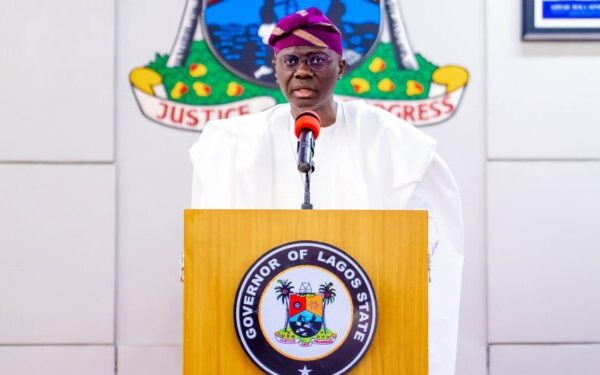
The project follows the approval of Governor Babajide Sanwo-Olu, with Octragon Multi Projects appointed as consultant to lead the exercise in collaboration with relevant Ministries, Departments, and Agencies (MDAs).

“The Lagos State Government has announced a comprehensive project to identify, document, and revitalise all informal land spaces across the state. The initiative aims to curb misuse, unlock economic value, and boost revenue generation,” the statement said.

The government added that proper documentation would also ensure fair compensation where applicable and improve transparency in land administration.

Scale and scope of the project

The CEO of Octragon Multi Projects, Engr. Gbolahan Awonusi, said the initiative builds on earlier land documentation efforts in Lagos, noting that the economic value of informal land assets has risen sharply over the past decade.

He disclosed that while the project initially targeted 2,000 hectares of undocumented land, it has now expanded to 3,744 hectares across multiple locations, with an estimated value of about N3 trillion.

The Permanent Secretary of the Office of Physical Planning, Engr. Olumide Sotire, described land as Lagos’ most critical resource, adding that formalisation would attract investment, improve urban planning, and increase government revenue.

The Lagos State Valuation Office will coordinate the exercise alongside relevant MDAs, while the Lagos State Informal Space Management Authority said proper valuation could transform informal spaces into sustainable, revenue-generating assets.

Why this matters for Lagos and Nigeria

Across Nigeria, millions of land parcels hold real economic and social value but remain excluded from the formal economy due to the absence of legal titles.

Without documentation, landowners are unable to use these assets as collateral, attract formal investment, or fully participate in the financial system, leaving vast wealth locked as so-called “dead capital.”

Lagos’ initiative seeks to reverse this by converting undocumented land into bankable, taxable, and investable assets—strengthening both private wealth creation and public revenue.

The N3 trillion estimate highlights the scale of value currently sitting outside official land records in the state.

Expert views on land formalisation

Industry experts say Lagos’ drive could play a critical role in accelerating land formalisation in Nigeria.

Engr. Babatunji Adegoke, General Secretary of the Nigerian Institution of Civil Engineers (NICE), Lagos State Chapter, said land registration goes beyond issuing titles, noting that it also provides critical data needed to align infrastructure with population growth. However, he warned that difficult terrain and limited technical capacity could slow surveys if not properly managed.

Ekpo Sun-myke, a certified town planner with the Nigerian Institute of Town Planners (NITP) and the Town Planners Registration Council of Nigeria (TOPREC), said formalisation would reduce land disputes and strengthen urban planning, adding that integrating customary systems and educating communities would be key to successful implementation.

A Quantity Surveyor with over a decade of experience said technology would be decisive, stressing that drones, GIS, and strong public-private partnerships could significantly cut the cost and time of land mapping in a complex urban environment like Lagos.

Alignment with national policy

Lagos’ move aligns with the Federal Government’s broader land formalisation agenda, backed by a World Bank partnership announced in September 2024 to register all land titles in Nigeria within five years.

With over 90% of land nationwide reportedly undocumented, the national programme targets an estimated $300 billion in dead capital.

A key component of the federal plan is the proposed National Land Digital System (NLDS), which aims to centralise records, improve transparency, and reduce fraud.

By launching this large-scale mapping and valuation drive, Lagos is positioning itself as an early and important implementer of the national land reform framework, potentially setting the pace for other states to follow.

Indigenous Contractors Renew Abuja Protests Over Unpaid ₦4 Trillion FG Debts

  • dollaers
  • January 20, 2026
  • Debt, Real Estate
  • 0 comments

Indigenous contractors on Monday resumed protests in Abuja over an alleged ₦4 trillion debt owed by the Federal Government of Nigeria for capital projects completed in 2024.

The protest, reported by the News Agency of Nigeria (NAN), comes just weeks after a similar demonstration in December 2025, when contractors raised the same concerns over unpaid obligations. While that earlier protest prompted partial payments, contractors say the bulk of the debt remains outstanding.

On Monday, protesters gathered at the Federal Ministry of Finance, insisting they would not leave until the remaining balance was settled. According to the contractors, only a fraction of the claimed amount was paid after the December action.

What the contractors are saying

Speaking at the protest, the President of the Association of Indigenous Contractors of Nigeria (AICAN), Jackson Nwosu, said the unpaid sum covers capital projects executed for the Federal Government in 2024.

He explained that although the projects were completed and verified, contractors have not received full payment. According to him, many members financed these projects through commercial bank loans, exposing them to mounting interest costs and financial strain.

Nwosu said only about 40% of the outstanding amount was paid following the December 2025 protest, adding that members would remain at the ministry until the balance was released.

“We are talking about over ₦4 trillion in unpaid capital projects executed for the Federal Government in 2024,” he said. “These projects have been completed, yet contractors are still unpaid.”

He warned that the association could escalate its actions if the government failed to honour its commitments, stressing that the situation poses risks not just to contractors but to the wider economy.

Impact on contractors

According to AICAN, delayed payments have pushed many indigenous contractors into severe financial distress. Nwosu said several members have defaulted on bank loans, with some reportedly losing properties to loan recoveries.

He added that the financial pressure has had devastating consequences for members, including reported cases of deaths linked to stress and hardship. The association accused the Federal Government of failing to honour agreements reached after previous engagements.

Nwosu also referenced assurances given by the Doris Uzoka-Anite, Minister of State for Finance, who reportedly promised that payment warrants would be issued once a verified list of completed projects was submitted. According to AICAN, despite submitting the list, no further payments followed, and members have not received any payment alerts.

This, he said, is despite directives from Bola Ahmed Tinubu instructing that the debts be settled.

What you should know

Unpaid obligations to contractors have been a recurring issue in Nigeria, particularly for capital projects executed under annual budgets.

  • In June 2025, the Federal Government said it was working to clear verified outstanding payments across Ministries, Departments, and Agencies (MDAs).

  • The Nigerian Senate later extended the implementation period for the 2024 capital budget to December 31, 2025, partly to allow more time for settling capital obligations.

  • In January 2025, reports indicated that the Federal Government faced cash flow constraints after the Central Bank of Nigeria declined requests for overdraft support.

  • In August 2025, Finance Minister Wale Edun said over ₦2 trillion in 2024 capital obligations had been settled, though contractors insist significant sums remain unpaid.

The 2026 Appropriation Bill earmarked ₦100 billion under the line item “Payment of Local Contractors’ Debts”, but contractors argue that this amount is far below what is needed to clear the accumulated arrears.

For now, the renewed protests underline growing frustration among indigenous contractors and highlight persistent challenges in Nigeria’s capital project financing and payment cycle.

Banana Island land prices soar 540% to N3.05 million per square metre in five years

  • dollaers
  • December 22, 2025
  • Real Estate
  • 0 comments

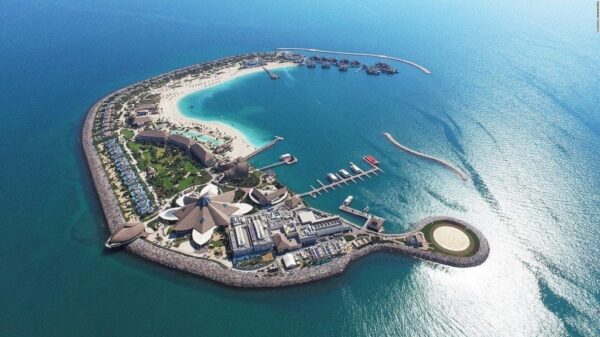
Land prices in Banana Island, one of Nigeria’s most exclusive residential enclaves, have surged by more than 540% between 2020 and 2025, reaching an average of N3.05 million per square metre in 2025. The sharp increase underscores the growing premium placed on scarce, high-end real estate in Lagos’ prime waterfront locations.

This finding is contained in the Lagos Residential Market Report 2025 published by Edala Development, which reviewed pricing trends across key luxury districts in Lagos over a five-year period. According to the report, Banana Island recorded the most dramatic land price growth among all the locations surveyed.

Limited supply fuels rapid appreciation

Edala Development’s analysis shows that land values in Banana Island rose from an average of about N470,000 per square metre in 2020 to approximately N3.05 million per square metre in 2025. The report attributes this sharp appreciation to a combination of limited land availability, strong demand from high-net-worth individuals, and the area’s reputation as a secure, well-planned luxury destination.

“Land prices in Banana Island remain among the most valuable real estate assets in Nigeria,” the report stated. “The price per square metre increased by over 540%, rising from an average of N470,000 in 2020 to an impressive N3.05 million by 2025.”

The report notes that much of the demand is driven by ultra-luxury mansions and detached houses, many of which are priced in US dollars. These properties continue to attract affluent local buyers, expatriates, and investors seeking long-term capital preservation amid currency volatility.

Rental values climb sharply

Beyond land prices, the Banana Island rental market also recorded substantial growth over the same period. A three-bedroom home that rented for about N11 million in 2020 rose to N27.5 million by 2025. Four-bedroom properties increased from roughly N18 million to N30.5 million, while two-bedroom apartments more than doubled in rental value.

The report suggests that strong rental growth reflects sustained demand for premium housing with proximity to business districts, waterfront views, and enhanced security infrastructure, all of which Banana Island offers.

Sales market posts strong capital gains

Capital appreciation in the sales market mirrored trends seen in rentals and land values. A four-bedroom home on Banana Island that sold for around N350 million in 2020 was valued at approximately N800 million in 2025. Three-bedroom properties rose to about N600 million, while two-bedroom apartments were priced at roughly N385 million by the end of the review period.

Edala Development noted that buyers increasingly prioritise quality of construction, exclusivity, and verified land titles, factors that continue to support higher pricing in Banana Island’s tightly held market.

Growth spreads across Lagos prime districts

The report found that the strong performance seen in Banana Island was echoed, though at lower levels, across other high-end Lagos neighbourhoods including Ikoyi, Victoria Island, and Lekki Phase 1.

In Ikoyi, one-bedroom apartment rents climbed from N2 million in 2020 to N8 million in 2025, while three-bedroom homes increased from N8.5 million to N25.5 million. Victoria Island also posted strong rental growth, with four-bedroom homes rising from N5.4 million to N20 million. Lekki Phase 1 followed a similar trajectory, reflecting sustained demand across Lagos’ luxury residential hubs.

Sales prices across these districts also delivered impressive gains. In Ikoyi, four-bedroom properties rose from about N300 million to N750 million over the five-year period, while Victoria Island and Lekki Phase 1 recorded comparable upward movements, particularly for larger units and properties with verified Certificates of Occupancy.

Land values rise across prime locations

Land prices outside Banana Island also surged significantly. Average prices in Ikoyi increased from N420,000 per square metre in 2020 to N2.15 million in 2025, while Victoria Island rose from N350,000 to N1.55 million. Lekki Phase 1 recorded a 316% increase, climbing from N264,000 to N1.1 million per square metre.

Why it matters

Recent market data suggests that Lagos’ luxury residential market remains resilient despite broader economic pressures. Analysts note that prime locations such as Banana Island, Ikoyi, and Victoria Island have delivered annualised naira returns of between 38% and 60% over the past five years.

For investors and developers, the 540% jump in Banana Island land prices highlights the enduring appeal of scarce, premium real estate assets in Lagos and reinforces the island’s position as one of the most valuable property markets in Nigeria.

Eko Atlantic Emerges as Lagos’ Fastest-Growing Luxury Residential Market with 59.5% Five-Year Sales Surge — Estate Intel Report

  • dollaers
  • December 3, 2025
  • Real Estate
  • 0 comments

A new market intelligence report from Estate Intel has revealed that Eko Atlantic now leads Lagos’ luxury residential segment, posting an impressive 59.5% sales growth over the past five years. The study, which analyzed price trends across Lagos’ most exclusive neighbourhoods, highlights the rising demand for ultra-prime real estate among high-net-worth individuals (HNWIs) and underscores the widening performance gap between purpose-built luxury districts and more mixed urban areas.

According to the report, luxury residential assets across Lagos have experienced some of the strongest price appreciations in Nigeria, with annual sales price growth averaging 38%–60% in naira terms. This surge reflects several factors: sustained demand from Nigeria’s expanding affluent class, persistent supply shortages in ultra-prime markets, and the growing global appeal of Lagos as a West African commercial and lifestyle hub.

Eko Atlantic, a master-planned coastal city built on reclaimed land along the Atlantic shoreline, has cemented its position as the most desired address for high-end buyers. Its top ranking is supported by exceptional infrastructure, reliable utilities, and advanced urban planning—all features that continue to drive premium pricing and long-term sales performance.

Other high-demand luxury enclaves also recorded notable gains. Ikoyi, historically one of Lagos’ most prestigious neighbourhoods, followed closely with 58.14% growth, reaffirming its status as the preferred location for traditional luxury homes, secure gated streets, and diplomatic residences. Banana Island, renowned for its exclusive waterfront homes and ultra-luxury estates, posted 55.30% growth, driven by intensifying competition for its limited land supply and elite community appeal.

Victoria Island—the city’s commercial powerhouse and mixed-use district—recorded 45.04% growth, showing continued investor interest in locations offering both residential comfort and proximity to business hubs. Meanwhile, Oniru, which has evolved into a vibrant middle-upper residential zone over the last decade, posted 38.32% growth. Though relatively moderate compared with ultra-prime districts, Oniru’s appreciation still reflects strong demand from young professionals and mid-tier investors seeking more accessible high-end housing.

Estate Intel’s findings point to a growing divergence between Lagos’ most exclusive districts and broader high-income neighbourhoods. Investors are increasingly willing to pay significant premiums for areas offering modern master-planning, enhanced security, scarcity value, and lifestyle infrastructure. As a result, districts designed from the ground up—like Eko Atlantic—are delivering exceptional long-term capital gains.

Why Eko Atlantic Leads the Pack

Insights from an earlier Nairametrics interview with Tosin Soile, Managing Director of August Crossing Limited and developer of the 16-storey Le Rêve project, help explain why Eko Atlantic consistently outperforms other luxury districts.

Soile emphasizes that the city offers a unique combination of features rarely found simultaneously in Nigeria’s real estate landscape. These include:

  • Master-planned, climate-resilient infrastructure

  • Uninterrupted power supply and stable water systems

  • High-speed internet connectivity

  • Superior drainage and flood-resistant engineering

  • Reclaimed and structurally reinforced land designed to withstand extreme climate events

Combined, these attributes create an environment suitable for high-rise luxury living, attracting both domestic and international investors.

Additionally, Eko Atlantic’s Free Zone status enhances its investment appeal by offering streamlined regulatory approvals, tax benefits, and government-backed subleases that provide stronger ownership security than in many traditional districts. These structural advantages have led to a surge in off-plan investments.

For example, the Le Rêve project—priced from $550,000 for three-bedroom maisonettes and $730,000 for four-bedroom units—demonstrates the scale of capital required for high-end development in the district. The entire project, valued at $25 million, brings together local and international contractors, structural engineers, architects, and project management professionals, ensuring global construction standards.

Beyond the physical infrastructure, the district also benefits from private security, professional facility management, and premium communal amenities, which collectively enhance living quality and long-term asset value.

These factors help explain why Eko Atlantic continues to attract high-net-worth Nigerians, diaspora investors, multinational executives, and institutional buyers seeking stable, high-yield real estate opportunities. With demand expected to rise and supply constrained by deliberate planning limits, analysts anticipate that ultra-prime districts like Eko Atlantic will continue to outperform the broader Lagos luxury market for years to come.

Forgot Password
Please enter your email address or username below.
*
 
Login
*
*
Lost Your Password
Dont have account? Signup