



























The Federal Government has approved the payment of N185 billion to settle longstanding debts owed to natural gas producers, marking a major intervention aimed at restoring confidence in Nigeria’s gas market and stabilising electricity generation across the country. The decision reflects the administration’s broader energy reform agenda and underscores its commitment to resolving bottlenecks that have weakened gas supply to power plants for several years.
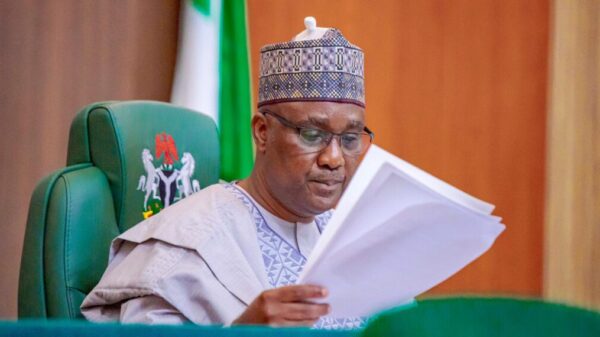
The payment was authorised by President Bola Ahmed Tinubu and formally endorsed by the National Economic Council (NEC) during its latest meeting chaired by Vice-President Kashim Shettima. Government officials describe the approval as one of the most significant energy-sector decisions taken since the administration assumed office, signalling a renewed focus on the gas-to-power value chain.
In a statement released on Thursday and reported by the News Agency of Nigeria (NAN), the Minister of State for Petroleum Resources (Gas), Dr. Ekperikpe Ekpo, said the settlement will provide immediate relief to gas supply companies, many of which have been affected by severe cash-flow gaps created by years of unpaid invoices. According to him, the N185 billion arrears stemmed from past supply obligations tied to electricity generation, and the backlog has placed considerable strain on producers’ operational capacity.
Ekpo noted that the delayed payments had discouraged new investments, slowed exploration activities, and reduced the capacity of suppliers to sustain gas injections into the national grid. As a result, many power plants struggled to access sufficient feedstock, contributing to the persistent shortfall in electricity generation that has affected homes, industries, and the wider economy.
To address these challenges, the approved settlement will be executed through a royalty-offset mechanism, which ensures that payments to suppliers are honoured while aligning with government fiscal priorities. The approach is expected to reduce uncertainty for operators in both domestic and international markets, many of whom have raised repeated concerns about Nigeria’s outstanding liabilities.
Describing the move as a “decisive step” for the sector, the Minister explained that the intervention directly supports the government’s flagship Decade of Gas initiative, a strategic programme designed to unlock up to 12 billion cubic feet per day (bcf/d) of gas supply by 2030. He stressed that rebuilding trust with gas producers will accelerate upstream investment, stimulate new field development, and enhance Nigeria’s energy security in the medium and long term.
Ekpo added that the benefits will extend beyond the gas industry, as improved supply to power plants will help restore output capacity, reduce outages, and ease the heavy energy constraints faced by businesses nationwide. According to him, adequate and reliable power is critical for industrial growth, job creation, and the competitiveness of Nigerian enterprises.
The Minister expressed confidence that clearing the debt backlog will also attract new capital to the sector, especially as transparency and fiscal discipline improve across the entire value chain. His position was reinforced by the Coordinating Director of the Decade of Gas Secretariat, Mr. Ed Ubong, who said the approval demonstrates President Tinubu’s determination to resolve structural weaknesses affecting the gas-to-power framework.
Ubong noted that the payment could unlock stalled projects and revive investor confidence, particularly in supply arrangements that have been frozen due to uncertainty over payments. He said the development positions Nigeria to move closer to its ambition of transitioning into a gas-driven economy.
The approval comes at a pivotal moment for the energy sector. Recently, the Federal Government concluded implementation frameworks for a N4 trillion government-backed bond intended to clear verified arrears owed to electricity generation companies (GenCos) and gas suppliers. Industry data shows that debts to gas producers have reached critical levels. In 2024, the Shell Petroleum Development Company (SPDC) disclosed outstanding payments of $1.3 billion, while regulatory authorities have reported more than N2 trillion owed to suppliers by the Federal Government and power generation firms.
In December 2024, the Nigerian Midstream and Downstream Petroleum Regulatory Authority (NMDPRA) instructed gas producers to halt supplies to indebted GenCos, highlighting the severity of the situation and the urgency of reform. The latest government action is therefore expected to ease tensions, restore supply flows, and support the country’s broader efforts to build a reliable and sustainable energy system.